







Public Diplomacy and the Third Metric

Huffington Post readers may be familiar with Arianna Huffington’s campaign to redefine success away from the two metrics of money and power toward a third which includes well-being, wisdom, and our ability to wonder and give back. The old, masculine signifiers of success lead to burnout, sleep deprivation and general grumpiness. Businesses should instead take care of their workforce, and indeed encourage their workers to take care of themselves. Read More


Shooting of Australian Student in Oklahoma Raises Questions About Perceptions of America Abroad

The recent senseless shooting of Christopher Lane, an Australian student athlete who was on a baseball scholarship at a small Oklahoma state university, is so sad and disturbing that it shakes our souls. It is hard to imagine the horror and sadness that his family and friends in Australia and Oklahoma must be experiencing at this moment. Nothing can explain why three “bored” teenagers would randomly kill a young man while he was jogging down a quiet road on a late summer day in an otherwise peaceful, small Oklahoma town. Read More

The Case for Blowing Things Up

As a committed advocate for soft power and public diplomacy, I look for ways other than military force to address even the most pernicious international behavior. Usually, talking is better than fighting and wise use of political power can make unnecessary the reliance on “kinetic action,” as military thinkers refer to combat. But there are times when a state’s actions are so outrageous and have so little chance of being altered by peaceful means that soft power measures should be set aside. On occasion, blowing things up is essential. Read More

PD Academic Research: Journalism & Mass Communication Scholars Consider Opportunities

Last week, for the first time ever, there was a panel dedicated to discussion of public diplomacy at the annual conference of the Association for Education in Journalism and Mass Communication (AEJMC). Held in Washington, DC the conference, and this panel in particular, offered an opportunity for scholars to talk about the emergence of public diplomacy as a subject of study in the discipline. Read More

We the People

I often say in international relations there six things a country can do: ‘giving, helping, sharing, boasting, shouting, and fighting.’ This fits with Joseph Nye’s classic definition of ‘soft power’ coined in 1990 as ‘the ability to attract and co-opt rather than coerce, use force or give money as a means of persuasion.’ In an ideal world sharing culture and trade is a lot better than firing bullets or giving aid. Read More

College Students Get Smart…Power: Connecting the Foreign and Local Publics

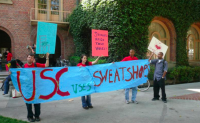
Through my involvement in labor rights activism, I started organizing direct actions under the USC student-run organization, “Student Coalition Against Labor Exploitation (SCALE).” SCALE is a smaller branch of the national student labor rights movement. Our advocacy program demonstrates how university students engage in public diplomacy with factory workers worldwide. Read More

Mahmud and Della Mae

Keepers of the PD Flame: An Appreciation of Embassy Local Staff

I got into the public diplomacy game as a local hire as a Foreign Service National (FSN) working for the Israeli Foreign Ministry as a Press Officer for the Consulate General of Israel to the Southwest. As such, I have a deep appreciation for others who work as FSN for various foreign ministries and the U.S. Department of State. Read More

Time to Rethink the CLO Position

For over 30 years, the Community Liaison Office (CLO) Program has provided key family services support to Foreign Service Officers and their families abroad. The program is now present in over 200 embassies and consulates, including unaccompanied hardship posts such as Baghdad, Kabul, and Islamabad. Read More

Pages

Subscribe to USC Center on Public Diplomacy RSS