








CPD Event
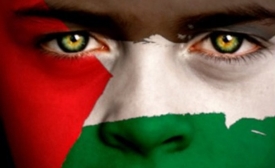
Communication professor Stephen O'Leary, the Center for Religion and Civic Culture and the USC Center on Public Diplomacy presented a public lecture by Anne Marie Oliver and Paul Steinberg, authors of The Road to Martyrs' Square (Oxford, 2005).
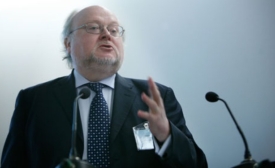
The School of International Relations hosted an address by Steve Smith, Vice-Chancellor of the University of Exeter, professor of International Studies.
Dr. Smith has written or edited 13 books, written nearly 100 academic papers and has given over 150 academic presentations in 22 countries. His most widely read work is Explaining and Understanding International Relations. He is the editor of the prestigious Cambridge University Press / British International Studies Association series.
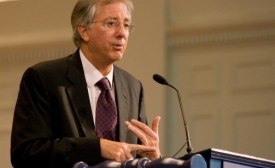
Dean Geoffrey Cowan, faculty, students and staff, discussed of "Politics, the War... and More" with David Baker and Ambassadors Dennis Ross and Swanee Hunt.
David Baker is senior foreign press coordinator for Israeli Prime Minister Ariel Sharon.
Ambassador Swanee Hunt is the former U.S. Ambassador to Austria who now directs the Women and Public Policy Program at Harvard's Kennedy School of Government.

The USC Center Public Diplomacy was invited to join State Department Spokesman and Assistant Secretary for Public Affairs Richard Boucher on Wednesday, February 23 at 3:00 p.m. EST for a live on-line chat.
Members of the student group logged on from the CPD conference room in ASC 103, where we were able to participate in the chat live on our big flat-panel screen! Following this inaugural event, over the next few months "Chat With a Diplomat" will feature a series of different speakers and topics, in which we will also hopefully be able to participate.
Dr. Steve Lamy and the School of International Relations faculty visited with Alan Charlton, Minister and Deputy Head of Mission (Deputy Ambassador), British Embassy, Washington D.C. Mr. Charlton addressed the subjects of the moment, (transatlantic relations; Iraq; MEPP, etc) and also on the two priority topics that Tony Blair has set for Britain's Presidency of the G8 this year: Africa and climate change.

Dean Geoffrey Cowan, faculty, students and staff, discussed "Politics, the War... and More" with Amabassor Derek N. Shearer.

CPD Student Group meeting with Dick O'Neill, president of the Highlands Forum.
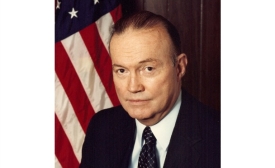
David Abshire describes strategy for successful Public Diplomacy at CPD Breakfast
>>> Watch a video of the event here <<<
Download talk Real Player version (streaming)
Download talk Windows Media version